Paris Pickpockets Shut Down the Eiffel Tower Before. The Playbook Still Works
PinGuard Team · September 7, 2026 · 4 min read

On May 22, 2015, staff at the Eiffel Tower walked out and shut the monument down for most of a day. Their complaint wasn't pay or hours — it was pickpockets. "There have always been pickpockets at the Eiffel Tower," a union representative said at the time, "but we are now facing an organized network," according to NBC News. It echoed a near-identical walkout at the Louvre two years earlier, over the same complaint.
Days after that strike, Paris police dismantled the network staff were describing. Ten suspects were arrested, working the Eiffel Tower and the Palace of Versailles in coordinated teams of three or four: one distracted a tourist with a fake selfie request or by asking directions, a second lifted the phone or wallet, a third walked off with it immediately so nothing incriminating was ever on the person who did the actual pickpocketing. Members posed as tourists themselves — audioguides, fanny packs, the works — and the group was pulling in up to €4,000 a day in peak season, according to Vice.
That was over a decade ago. The reason it's worth revisiting now is that the method described in 2015 is the exact method still named today, on the same handful of Métro lines, in current travel-safety guidance and the Paris police prefecture's own prevention advice.
The same lines, year after year
The hotspots aren't a mystery, and they haven't moved: Line 1 between Louvre-Rivoli and Bastille, Line 4 through the crowds between Châtelet and Saint-Michel, Line 6 around Trocadéro near the Eiffel Tower itself, and RER B between Gare du Nord and Châtelet — the airport line, which draws crews specifically because it's full of tourists who just landed and haven't settled into paying attention yet.
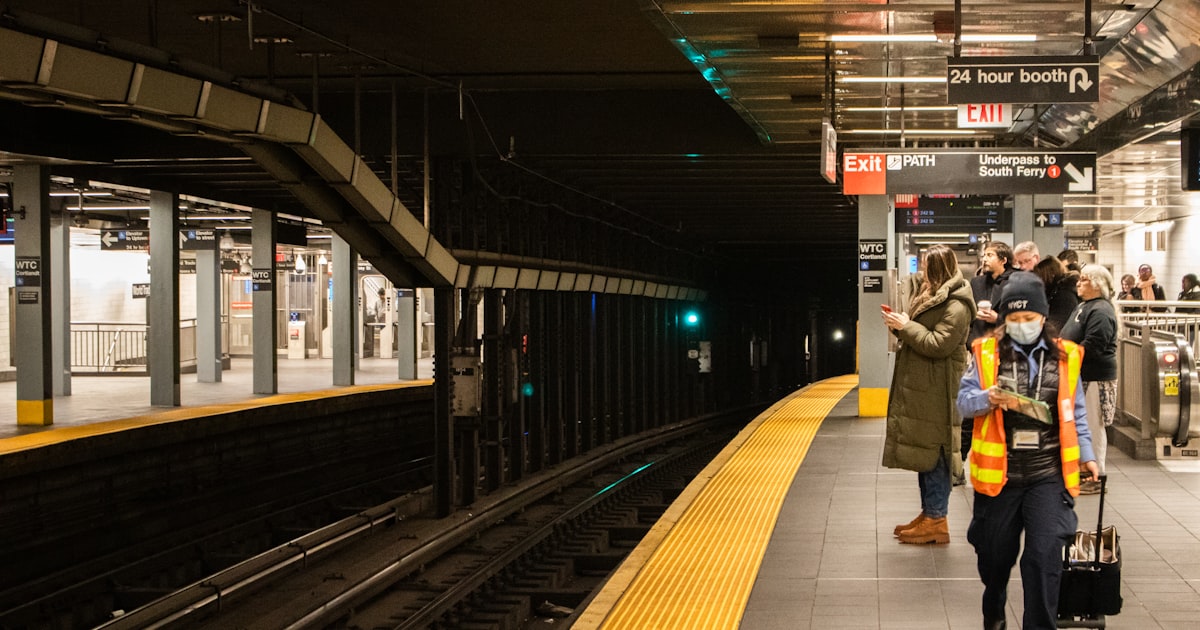
 Bastille marks one end of Line 1's best-known pickpocket stretch. Photo by Sebastien Gabriel / Unsplash.
Why this is a different scenario than a street snatch
London and New York's phone thefts are mostly grabs — taken directly from a hand, in the open, while the screen is unlocked. Parisian pickpocketing is built to be the opposite: lifted from a pocket or bag while you don't notice at all, which is only possible because you're not actively using the phone when it disappears. That means the phone is almost always locked at the moment it's taken.
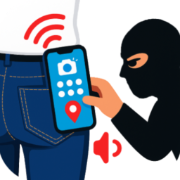
That distinction matters for what happens next. Whoever ends up with a phone that was never unlocked in front of them has to get past the lock screen cold, with no idea of the PIN, pattern or face it expects. If failed-unlock alerting is switched on, that first blind guess becomes a photo of whoever's holding the phone, taken on the front camera, plus its exact location — sent out immediately by email. PinGuard's setup guide covers enabling this; it isn't on by default.
What the three-person handoff defeats
The 2015 gang's structure — lift, then hand off immediately to a third person — exists specifically to put distance between the theft and whoever ends up holding the evidence. It doesn't defeat a phone-based alert, though: whoever eventually has the phone still has to unlock it eventually, whether that's the runner, a buyer, or someone further down the resale chain. It just means the photo an alert captures may not be the same person who pickpocketed you — which is still useful information for police, and still more than nothing.
A SIM swap tends to follow once a phone reaches someone who intends to actually use or resell it, and it breaks less than most people assume — another reason it's worth treating as its own trigger, not just a failed unlock.
What this doesn't solve
None of this stops the lift itself — that's a crowd-and-distraction problem, not a device one. And a phone that's powered off immediately or wiped before ever reaching a lock screen never generates an alert. Your own next moves still matter most: freeze accounts, get the IMEI blacklisted with your carrier, and file a report. The order is in our stolen phone checklist.
If it happens to you in Paris
Report it at the nearest commissariat or via the préfecture de police's own guidance, which is kept current at prefecturedepolice.interieur.gouv.fr. Ask your carrier to blacklist the IMEI — do this even if you're on a foreign SIM or eSIM while traveling, since it's a separate step from cancelling the plan itself. And check Google's Find My Device before assuming the phone is unreachable: it works over Wi-Fi across any network it recognizes, with no SIM required at all.