NYC Subway Robberies Are Up 15% This Year. Your Phone Is Target Number One
PinGuard Team · September 7, 2026 · 4 min read
On the evening of August 17, 2026, a 35-year-old man riding the A train was punched in the face by a stranger at the 88th Street station in Ozone Park, Queens. In the scuffle he dropped his phone. The attacker grabbed it and ran. Police are still looking for him, and the NYPD is offering up to $3,500 for a tip that leads to an arrest, according to QNS.
It's one incident, but it fits a pattern NYPD's own numbers confirm.
What the numbers actually say
Two things are true about the subway at once this year. Transit felonies are down 1.5% year to date and assaults are down 5.5% — 2025 was, by NYPD's own account, the safest year underground since 2009. But robbery is the exception: up 15% year to date, climbing from 118 incidents to 136 over the same stretch, according to figures reported by ABC7 New York. The NYPD has responded by adding 175 more officers underground, on top of 750 the Governor's office deployed earlier.
Robbery is the category that covers most phone snatches — taking something directly from a person, by force or threat, rather than lifting it from a bag unnoticed. That's exactly the category climbing while everything else falls.
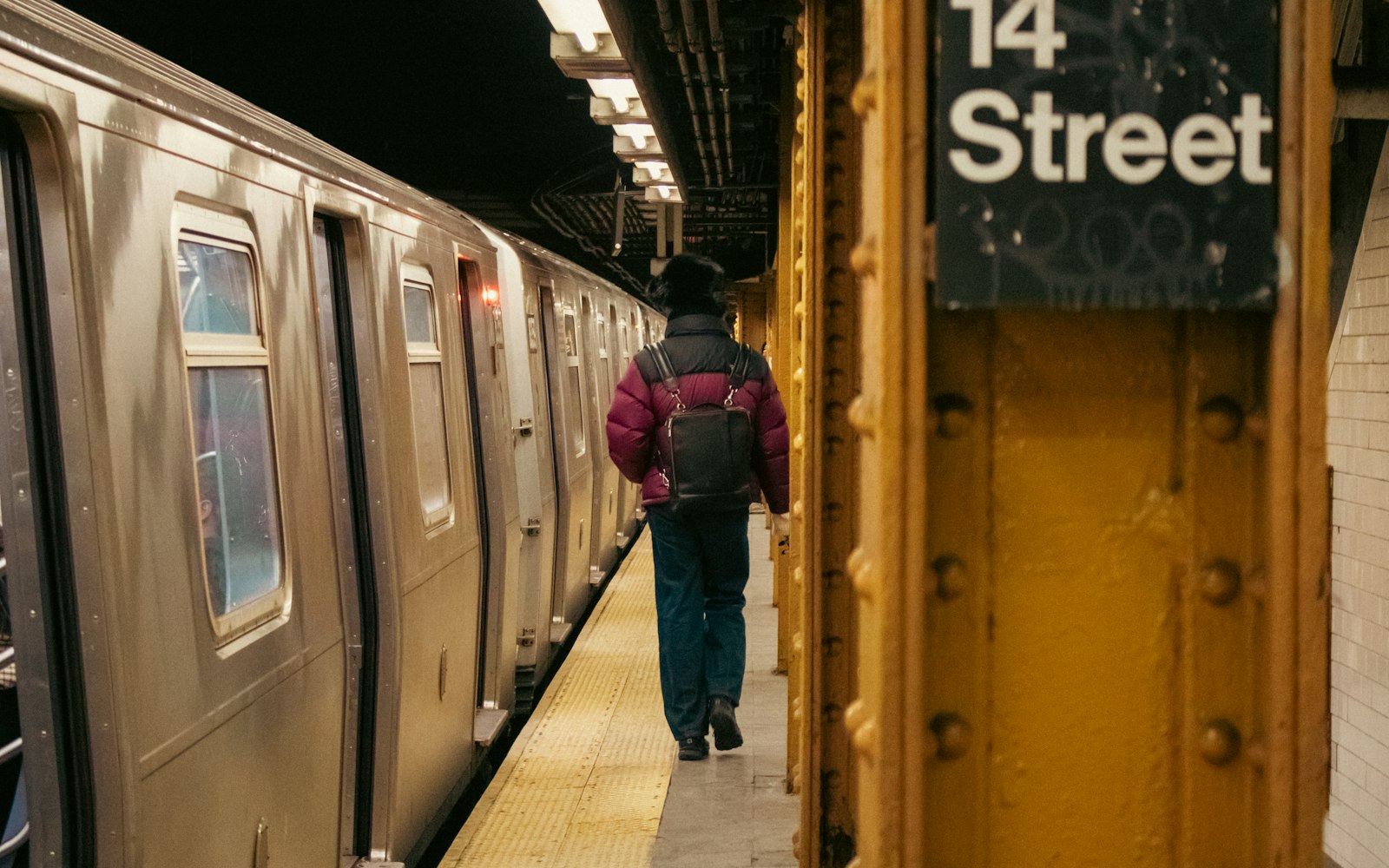 Some riders check their phones while waiting; that's the moment a robbery usually starts. Photo by Zoshua Colah / Unsplash.
How it actually happens
The Ozone Park case is a fight that turned into a phone grab. The more common version doesn't involve a fight at all: a phone held in the hand, screen unlocked, attention on the platform announcement or a text — and someone takes it directly out of your grip, often right as train doors are closing so they're already gone by the time you react. Neither version leaves the phone itself any way to stop the moment. That part is a policing problem, which is what the extra officers above are for.
Where the phone's own security starts working
The gap opens once the phone is out of your hand. Left unlocked, it reaches its screen timeout within a minute or two by default, and from that point whoever's holding it needs a PIN, pattern or fingerprint they don't have to keep using it or resell it as working.
If failed-unlock alerting is switched on, every one of those guesses becomes a photo of whoever's holding the phone, taken on the front camera at the instant they fail, along with the phone's location at that moment — sent out immediately, before anything else about the device changes. PinGuard's setup guide covers turning this on; it isn't enabled by default.
What this doesn't solve
A thief who powers the phone off right away, or drops it in a signal-blocking bag, never triggers an unlock attempt — nothing fires until the device reaches a network again. That's why your own next steps still decide most of the outcome regardless of whether an alert ever comes through: freeze the accounts, get the IMEI blacklisted, file the report. The full sequence is in our stolen phone checklist.
A SIM swap is often the next move after a resale-bound theft, and it breaks less than most people assume — which is exactly why it's worth treating as its own alert trigger too.
If it happens to you in the subway
Report it to a transit officer or precinct right away, or call 911 if you're in danger. NYPD Crime Stoppers takes tips anonymously at 1-800-577-TIPS if you saw anything after the fact. Ask your carrier to blacklist the phone's IMEI — this is a separate request from suspending the SIM, and you want both. Check Google's Find My Device before assuming the phone is gone: it works over Wi-Fi even with no SIM inserted, which covers more situations than most riders expect.